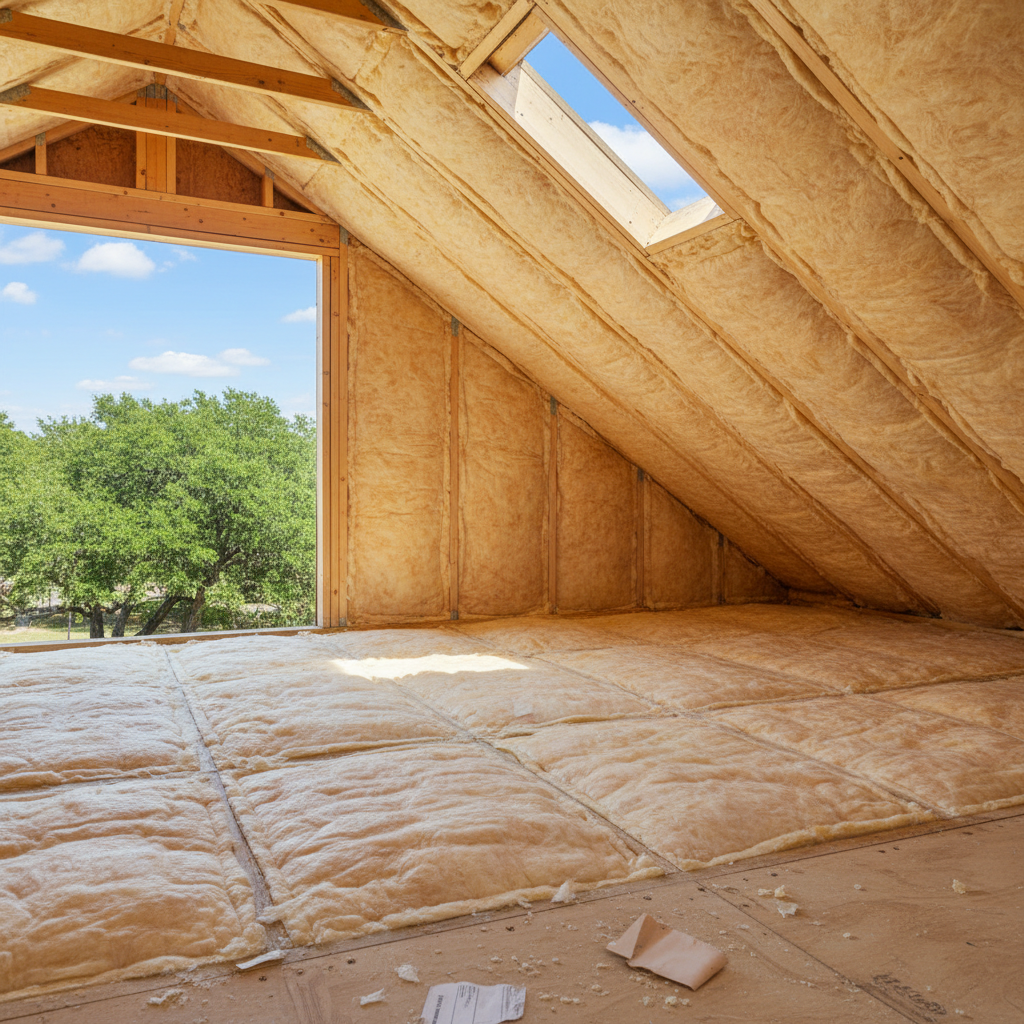
Homeowners in Kyle, Texas often crawl up into their attic during a scorching July afternoon and feel like they have walked straight into an oven. If your home has batt insulation installed, keeping it maintained is important for protecting your living room from a high electric bill. Down here in Hays County, the combination of heavy humidity swings and blistering heat takes a real toll on fiberglass batts. Star Insulation wants to look at what it actually takes to keep your batts working right year after year without wasting money.
How to Extend the Lifespan of Your Batts
Batt insulation is not a set-it-and-forget-it installation, especially in our climate. The biggest key to making batt insulation last is managing airflow and moisture in your attic space. If your attic has soffit vents clogged up with dust or old debris, your batts are going to trap hot, humid air instead of letting it escape. Make sure your ridge vents and gable vents are completely clear. When Star Insulation is out doing jobs in Kyle, TX, our team always checks that the pathway for air movement is wide open before we call a retrofit finished. Another big factor is keeping storage boxes off the batts. Compressing fiberglass ruins its R-value instantly. If you need storage space up there, build a raised platform across the joists so the insulation underneath can breathe and keep its loft.
What Regular Maintenance Actually Looks Like
Homeowners do not need to climb up into the attic every weekend, but getting up there twice a year—once in the spring before the heat hits and once in the fall—is a smart practice. Grab a flashlight and look for a few specific things:
- Sagging or drooping batts hanging out of floor joists or rafters
- Discoloration or dark smudge marks on the paper facing, which usually means air is leaking right through there
- Any signs of rodent nesting, because field mice love tunneling into soft fiberglass when the weather turns cooler
If you spot a batt that has slipped out of place between your ceiling joists, do not just leave it hanging. Grab a pair of gloves, staple it back up securely, or refit it snugly. Gaps are where your conditioned air escapes and outdoor heat sneaks in.
Warning Signs of Failing Insulation
Your house will usually tell you when your batt insulation is giving up the ghost long before you climb up the ladder. Are certain rooms in your house refusing to stay cool even when your air conditioning runs constantly? Have you noticed your monthly power bill creeping up compared to what your neighbors are paying in Kyle, TX? That is a classic sign. Musty odors are another major red flag. Central Texas weather loves to breed humidity, and if moisture gets trapped behind the vapor barrier on your batts, mold can start growing out of sight. Musty smells mean you need to investigate immediately.
When It's Time to Call a Professional
Some minor sagging can be fixed yourself with a staple gun and a good pair of gloves. But there are moments when you need to put the tools down and call in backup. If you find widespread water damage from a leaky roof—common during those heavy spring thunderstorms we get around Kyle—wet fiberglass batts lose all their structural integrity and need complete replacement. They will not bounce back once they are soaked. The same goes for severe pest infestations. Once rodents chew up and foul a large section of insulation, it is a health hazard that requires a full strip-out and sanitation. For Kyle homes, Star Insulation is here for all your Insulation Contractor needs. Star Insulation will get your attic squared away so you can stay comfortable no matter what the Texas thermometer reads.